
Monday, 23 February 2026
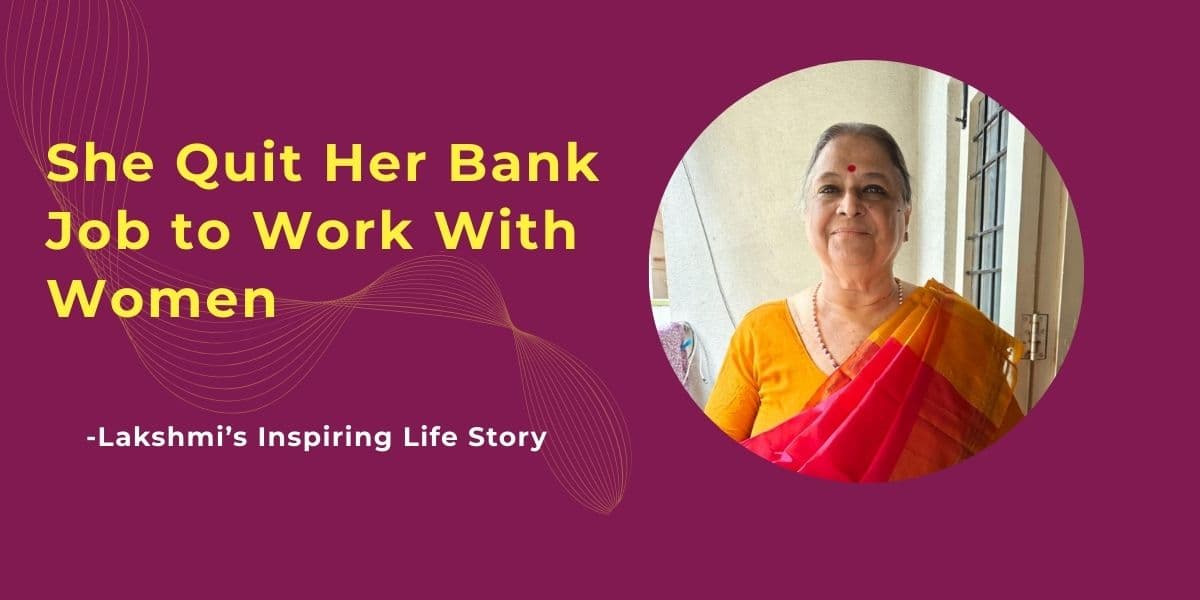
She quit her bank job to work with women - Lakshmi’s Story
When Lakshmi Raman decided to quit her well-paying bank job, she was the single mother of two young daughters. She knew what challenges were at stake. But she still went ahead with faith that she could survive. What convinced her to take this ‘foolhardy’ decision? Let us slowly unfold Lakshmi’s life to answer this question.
Childhood at Marine Drive
Lakshmi was born in Mumbai and spent a significant part of her childhood there. She lived in one of the posh localities of Mumbai, Marine Drive. She often saw politicians, celebrities and film stars drive by in fancy cars. She still remembers seeing elegantly dressed Parsi women sipping tea, sitting on folding chairs at the Gateway of India.
Literature - and Life in all its twists and turns
Lakshmi’s father worked in the Navy, and the family moved to wherever he was posted. She attended schools across India, eventually enrolling at the University of Kerala for a degree in English Literature. This is where she discovered her love for literature, although a love for reading was stimulated by a fond uncle who used to bring her loads of books in childhood.
She was slated to go abroad for higher studies after her Bachelor’s Degree when her father’s sudden death put a stop to her aspirations. Suddenly, she was responsible for taking care of her ‘kid’ siblings and her mother. She took up the first job that let her be with family and joined Bank of America in Chennai. Lakshmi was just 20 when she joined the bank with a dislike of maths and no clue as to what happened in a bank! The job at hand was tremendous. As a Teller, she had to stand all day, handle transactions in multiple currencies and work late. But it was good grounding in work experience, in discipline and in making no excuses when something went wrong.
In the meanwhile, her friendship with a fellow staff brought her in touch with the latter’s brother, also a literature aficionado, besides being a staunch labour rights activist. They exchanged ideas and books, fell in love, got married and had two beautiful daughters.
The Marriage Journey
Six years into the marriage and it began to unravel, what with her husband’s frequent absences on trade union work, lack of emotional support and financial problems from having to take care of her 2 younger brothers in addition to her own family. After some time, her exhaustion finally reached crisis point and she parted ways with her husband.
Taking the Leap to Singledom
Thereafter, Lakshmi single-handedly juggled work, now as a bank official, with home and children with no family support. ‘Divorce’ was a bad word and family did not help her out. She made sure her daughters were cared for and comfortable. But her lived experience of a difficult marriage got her thinking about issues faced by other women. The urge to quit her job and ‘do something for women’ grew stronger. However, she wondered how she would manage as the sole breadwinner of the family. As she struggled with this dilemma over a year, early one morning, reading a book by the venerable Buddhist monk Thich Nhat Hanh, she came across the words: “Drink your tea slowly and reverently, as if it is the axis on which the whole earth revolves.” – Thich Nhat Hanh
It suddenly dawned on her that she was spending too much time worrying about the future and not dealing with the present. What was the worst that could happen? If she didn’t get a job like her bank job, she could get work as a typist. The world did not end. This clarity gave her confidence. After discussing with her daughters, she resigned her job!
Working With Communities and Women
After quitting the bank job, Lakshmi worked with an NGO for 3 years before she struck out into independent consulting with NGOs. Her work building NGO staff capacities, travel on field visits across India by bus and train by second class and encountering different people and situations opened up a whole new world of experience to her. She earned far less than she had been earning in the bank. All her life, she had been an ‘urban creature’ who had lived only in cities. But now she was travelling to remote villages in all kinds of weather, listening to women about their issues and making recommendations to redress them. She stayed in their tiny houses, chatted late into the night and shared meals with them.
Each village she visited, she discovered the myriad ways in which women were oppressed and stigmatised. She vividly recalls a woman in a small house, squinting painfully at the garment she was stitching on her tailoring machine. "Why don't you wear spectacles?" Lakshmi asked, noticing the woman's obvious struggle. The reply was a gut-punch: "If I wear glasses, people will think I am being ‘stylish, even uppity’." At that moment, Lakshmi saw the invisible bars of the cage that confined Indian women, not just economically, but socially too. Her work took her across hundreds of villages and urban slums. Lakshmi didn’t take to the streets to protest as she had done in her younger days. But she quietly spent days advising women in savings collectives, motivating them, sharing her own story and helping them believe that they could have a better future tomorrow. For her, consulting was not just a means to earn a living. It was (and continues to be) a way to share knowledge and skills and motivate women to believe in themselves and in the prospect of a better future that they could work towards.
Lakshmi has travelled to 9 countries on work, including 2 difficult trips to Afghanistan. There’s no place like India, she says.
Where Lakshmi is Today
Now settled in Bangalore from 40 years, Lakshmi is 75, and continues to work with NGOs. Her joy in her work is part of a life with conversations with her daughter or Zoom calls with her grandson. She does yoga in the mornings, cooks, meditates, reads travel books, enjoys an afternoon nap and is still ready for the challenges that life may bring!
Journey With Marzi
Lakshmi believes that social connectedness and an active social life are essential for seniors to stay healthy and happy. Yet she agrees that, for older people, circumstances and health conditions may often make going out to socialise difficult. This is why she is deeply grateful for seniors’ digital platforms like Marzi that have made connecting with others easier and more accessible. Through the Marzi community, she takes part in online discussions, webinars and WhatsApp exchanges to stay meaningfully engaged with others. As for Marzi trips and holidays, “That’s for another day’ she quips.